
Your Opponent Gives You a Gift Every Move (Most Players Never Open It)
Most players ask what their opponent is threatening. The better question is what their move stopped defending.Here’s something that might ruffle a few feathers: asking “what is my opponent threatening?” is not enough, and it might even be holding you back.
Before anyone closes the tab, let me be clear. Asking what your opponent is threatening is a good habit, and it's miles better than not asking anything at all. I actually wrote a whole chapter on the "What's the Threat?" question in my Chessable course on defensive calculation, so I'm not about to talk you out of it.

But it's only half of a much better question, and most players never learn the second half. The good news is that the second half is easy to add, and once you start asking it you'll find moves you used to skip right past.
That second half comes from something called the drawback principle. The idea is that every move your opponent makes gives something up. When they move a piece or push a pawn, they gain control of some squares but they lose control of others at the same time. A pawn that was guarding a key square stops guarding it. A piece that was defending a knight wanders off and leaves it loose. So the question isn’t just “what did their move do?” It’s also “what did their move undo?”
I first heard this called the drawback principle in the course “Find Your Next Move: Candidate Moves and Thinking Tools” by GM Sipke Ernst and Karel van Delft. GM Ramesh talks about it in “Fundamental Chess: Logical Decision Making”, and GM Soltis recommends it as a candidate-move tool in “How to Choose a Chess Move”. IM Josh Waitzkin describes the same thing as “the space left behind.” Different names, same truth: when your opponent commits to a move, they leave a gap somewhere, and your job is to go find it.
Why “what are they threatening?” isn’t enough
When you only ask what your opponent is threatening, you’re playing defense. You’re reacting. You spot the threat, you deal with it, and you move on. That’s fine, but it’s a narrow lens; it only shows you the danger, not the opportunity.
The drawback question flips it around. Instead of “what danger did they just create?” you’re also asking “what gift did they just hand me?” Those are two very different mindsets, and the second one wins more games. Your opponent’s move almost always weakens something, even if it’s not relevant all the time. The players who win are the ones who go looking for that weakness on every move, not just when they feel threatened.
Where this fits in your thinking
This isn’t a whole new system to memorize. It slots right into the first step of the thinking process I’ve written about before. I’ve started using the acronym SCAN to keep it simple:
- S — See what their move did
- C — Check forcing moves
- A — Advance your position (planning)
- N — Notice their reply (blunder check)
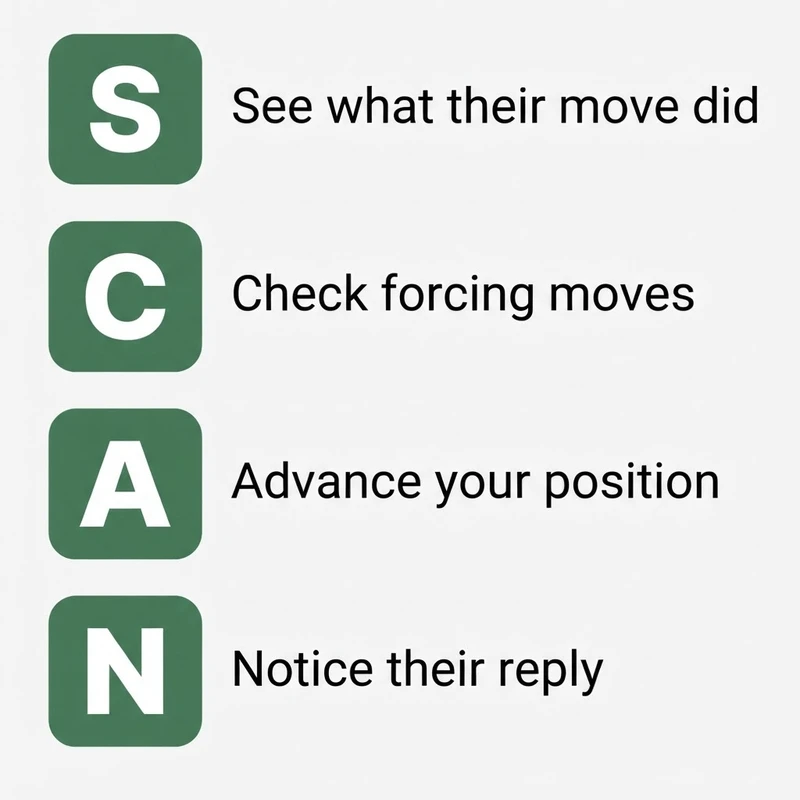
That first letter, “See what their move did,” is where the drawback principle lives. And “See what their move did” means both halves: what they did and what they undid. If you want the full walkthrough of the thinking process, it’s all in this article: https://chesschatter.substack.com/p/chess-thinking-process
When your opponent moves, run down this quick checklist:
- Did they move a piece that was defending something? That something might be hanging now.
- Did they move a piece off a square you’d love to occupy yourself?
- Did they push a pawn and open a diagonal, file, or rank you can use?
- Did they push a pawn and leave a permanent hole next to it? (Pawns don’t move backward, so those weaknesses don’t heal.)
- Did they push a pawn in front of their own king? Their king just got a little less safe.
Example 1
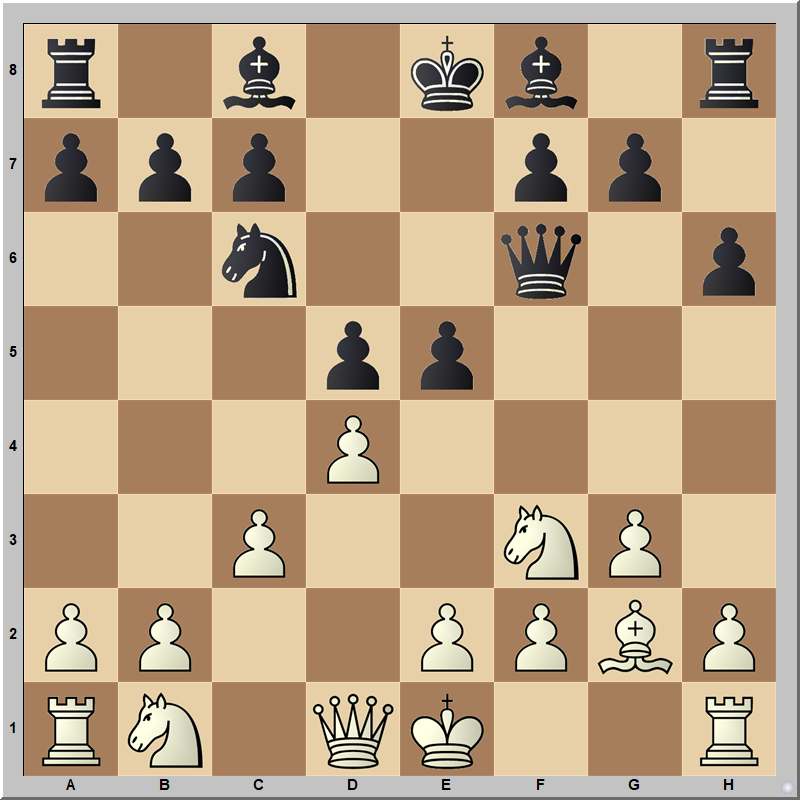
This position is from a students game. Black has just played the move 1...e6-e5. What is the drawback of black’s move? How can White take advantage of this move?
The drawback of the move 1...e6-e5 is that the pawn on d5 is no longer defended. Now White can play 2. dxe5 Nxe5 3. Qxd5 and win a pawn for free.
Example 2
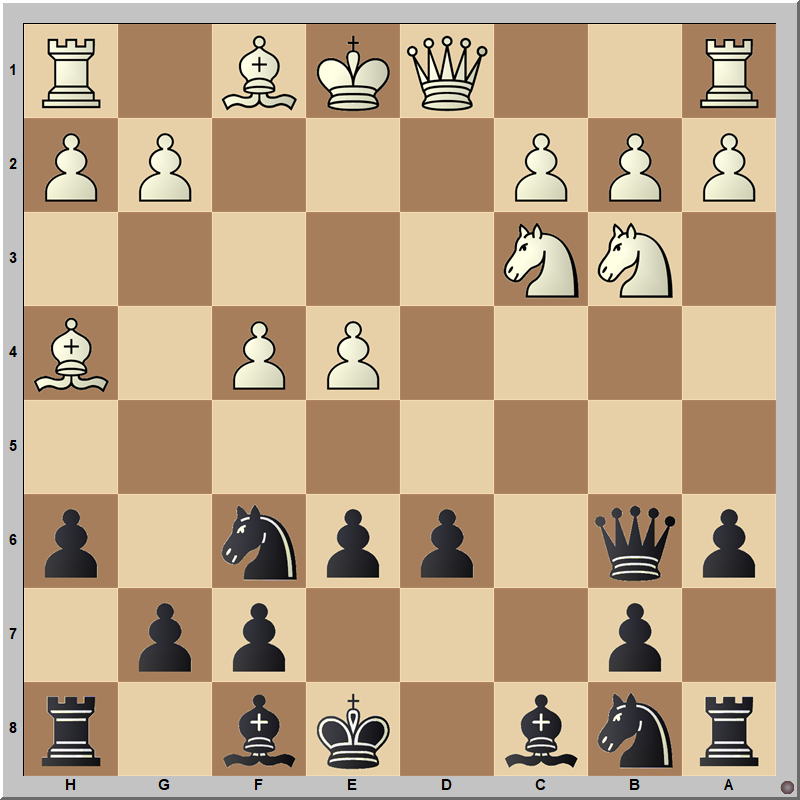
This position is from a student’s game. White has just played the move 1. Nd4-b3. What is the drawback of white’s move? How can Black take advantage of this move?
The drawback of this move is that the diagonal from g1-a7 is opened up more for black’s queen (the knight on d4 was blocking the diagonal) and now Black can play 1...Qe3+ forking the king and f4-pawn. No matter how White blocks the check, Black will win the f4-pawn (or the e4-pawn if White plays Ne2).
Example 3
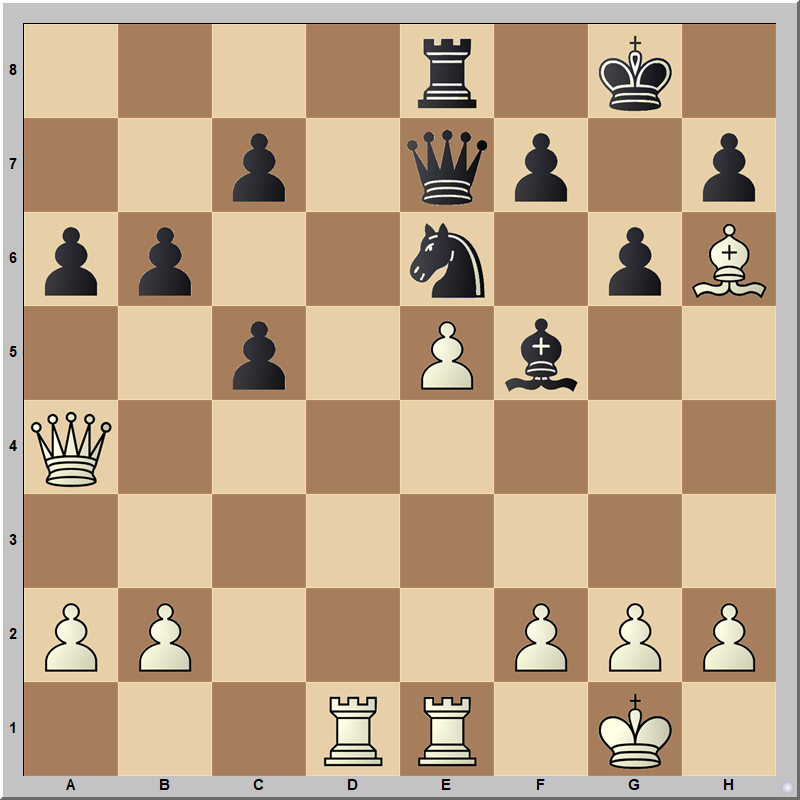
This position is from one of my games during the Naroditsky rapid tournament. Black has just played the move 1...c6-c5. What is the drawback of black’s move? How can White take advantage of this move?
The drawback of black’s pawn move is that the diagonal for our queen on a4 is opened up towards e8. Along the diagonal is the d7-square and now we are able to play 2. Rd7 which traps black’s queen. In the game Black tried 2...Bc2 to counterattack my queen but after 3. b3 Black has no good way to avoid losing material and lost the game soon after.
Example 4
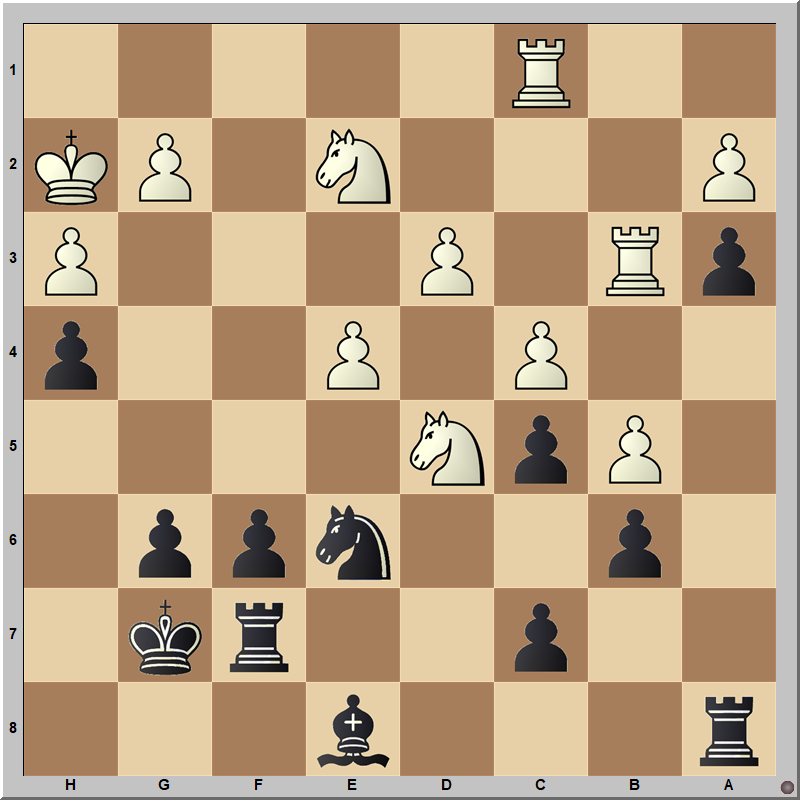
This position is from Nakamura vs Madaminov during the Naroditsky blitz finals. White has just played the move 1. Rf1-c1. What is the drawback of white’s move? How can Black take advantage of this move?
The downside of white’s move is that white’s rook is no longer defending the f5-square which means Black can make the pawn break 1...f5 which improves their position. Nakamura describes this position in more detail in his recap video (link is time-stamped for the specific position).
The takeaway
So here’s the reframe. I’m not telling you to stop asking what your opponent is threatening. I’m telling you that question is only half done. Finish it. Every time your opponent moves, ask: What is the drawback of my opponent’s move? What did their move undefend?
That one addition costs you nothing, and it changes what you see on the board. The weaknesses your opponent hands you are there in every position whether you look for them or not. Start looking, and you’ll start finding them.
If you want help catching the moments you missed, Chessalyz.ai is a solid tool for breaking down your games and seeing where a drawback slipped past you.
Now I want to hear from you: what’s a game where spotting (or missing) your opponent’s drawback made the difference? Drop it in the comments.
If you found this article helpful, consider checking out my Substack newsletter "Chess Chatter".
You may also like
 GM Avetik_ChessMood
10 Things to Give Up to Enjoy Chess Fully
Discover how embracing a lighter mindset can help you enjoy chess again and achieve better results. thibault
How I started building Lichess
I get this question sometimes. How did you decide to make a chess server? The truth is, I didn't. FM MattyDPerrine
I'm on the Perpetual Chess Podcast
Give it a listen! FM MattyDPerrine
The Threat Hierarchy: When to Fight Back Instead of Defending
Stronger players don't defend more. They defend less. Here's how. IM datajunkie
You’re studying chess openings the wrong way (do this instead)
If memorising opening lines made you stronger, many club players would be masters. CM HGabor