
10 chess books that changed how I see the game
Three years ago, I wrote about the 10 chess books that helped grow my understanding and love for the game on the way from beginner to IM. Since then I’ve read more, taught more and have come to appreciate further what books did for me.
A big part of chess improvement is playing and learning from your own games but it’s important to learn from other players too, and books are where you can find high quality games and thoughts about chess. I believe they’re still as relevant as ever today.
Here are 10 books that can not only give you ideas and ways of thinking that can make you a better player, but also give you humility, beauty, history and a deeper sense of belonging to something bigger than your own results or own game. (Note: I’ve included pairs of books and series as the sum is even bigger than their parts)
1. How to Become a Deadly Chess Tactician (2004), LeMoir
Best for: tactical inspiration and sacrifices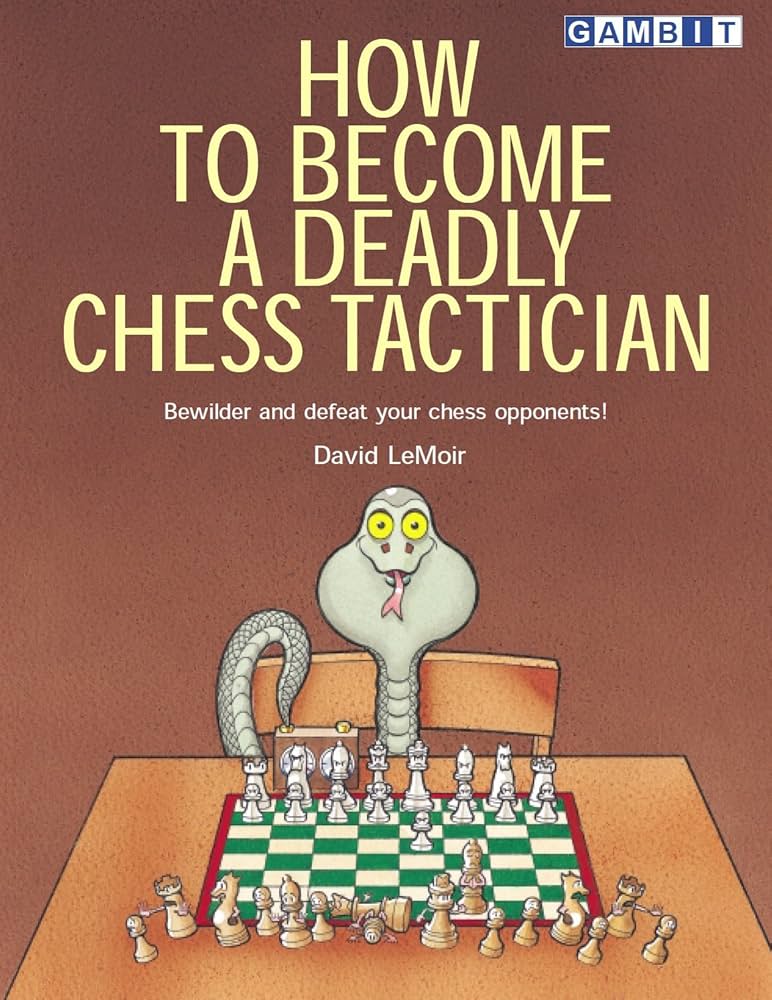 Most books on tactics train your eye for patterns: solve enough and you start seeing them in your games. LeMoir shows you that being a tactician is an identity you grow into that comes before the skill. It’s a mindset, a way of seeing the board and enjoying the moments where you can go for something sharp or play a sacrifice with more ambition, more imagination and less obsession with material. His love of sacrifices and dynamic play comes through on every page.
If you feel like you see tactics fine in puzzles but they never seem to appear in your actual games, this book might be the missing piece.
2. The Mammoth Book of The World’s Greatest Chess Games (1998), Burgess, Nunn & Emms
Best for: the classics and falling in love with great chess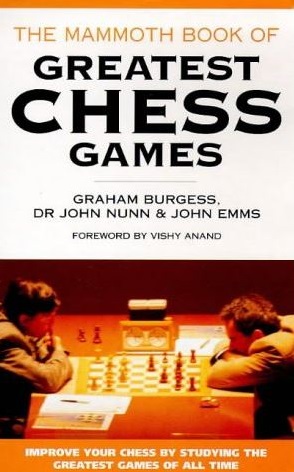
This is probably the chess book I reread the most in my life, many of the pages have fallen off the spine. In my 1998 edition, 100 of the best chess games in history from 1834 to 1997 were included. The latest edition has 145 games up to 2021. You see Anderssen’s sacrifices, Capablanca’s technique, Tal’s magic, Fischer’s brilliance and masterpieces you’ve never heard of: game after game that makes you marvel at the amazing moves and ideas that can happen on a chessboard.
When you’re young or new to the game, it’s easy to think chess is just about your next game, your next rating or next result and all you need are the newest tools and apps. This book shows you that a game played in 1834 can still inspire and teach you. You realise that chess has a history worth knowing, and inside that history lies a standard of tactical, positional and strategic mastery worth emulating. It makes you want to improve so you can one day play a game that you’ll always remember.
3. Secrets of Modern Chess Strategy (1999) / Chess Strategy in Action (2003), Watson
Best for: positional concepts and learning when rules don’t apply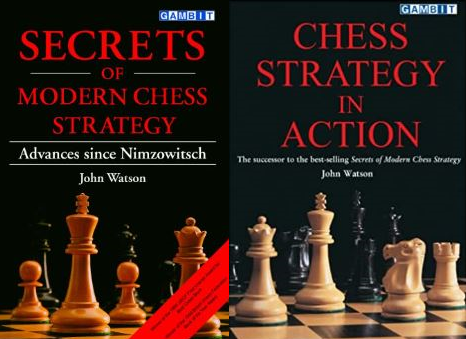 When I was a club player, these books helped deepen my understanding of the game so I could recognise the different parts in a position. What makes these books useful is that Watson shows you what the principles are + where they came from, when they actually apply and when strong players deliberately ignore these ‘rules’ and why that works.
These kinds of books make you realise that chess strategy and positional play aren’t a rulebook, but more like a set of tendencies that give you some clues in any sort of position. They encourage you to start asking “what’s the most important factor in this position?”, that’s a different kind of thinking and it takes time to build, which these books can help you accelerate. If your tactics are solid but you don’t understand positions without any tactics, these are a good place to start.
4. Chess: The Search for Mona Lisa (2001), Gufeld
Best for: chess as a life, not just a game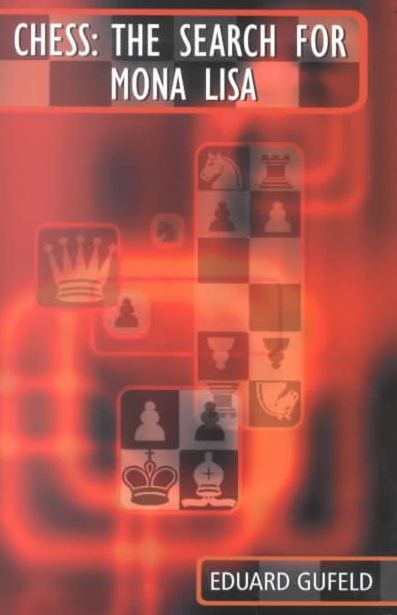 This autobiography has lots of exciting annotated games (The Mona Lisa Game for one), but what I remember more vividly are the stories. Travelling the world for tournaments, friendships made across the board and the highs and lows of professional chess. A life playing chess is also all the people you meet at tournaments, all the places you visit and all the memories you make.
I think playing through so many Gufeld games had something to do with me becoming a fianchetto player years later (it was his cup of tea). With books like this one, you also absorb their tastes and the way they see the board. What left an impression on me was the feeling that chess could be something you devote yourself to completely: the game keeps offering you something worth living for, both on and off the board.
5. My Great Chess Predecessors, Volumes 1–5 (2003–2006), Kasparov
Best for: the world champions and the historical evolution of chess I had the first volume signed by Kasparov in 2014!
Well, what can I say. Garry Kasparov, the 13th World Champion, arguably the greatest chess player ever, writes about his 12 predecessors (+ the challengers and top players), their matches and all of the trials and tribulations they experienced on and off the board. These books give you a sense of chess as something that evolves. Each generation of top players thought differently. Steinitz shifted the scene from romantics to principles, Alekhine expanded chess toward dynamic imbalances, Botvinnik was the first professional with scientific preparation and Karpov took positional pressure to a new level.
These aren’t light reading. But if you’re serious about chess, there’s nothing quite like sitting with a board and working through what Kasparov can show you in these games. You’re reminded of the fact that everything new is only something old that’s been forgotten. His other hardcover series, Modern Chess (including volumes on his historic matches with Karpov) and Garry Kasparov (his career in three volumes) are also awe-inspiring works that a hardcore chess enthusiast shouldn’t miss.
Like with these books, learning from stronger players is an important pillar in chess improvement and it’s one of the habits in my upcoming video course, The 10-Habit Chess Improvement System which will launch in July.
It’s a system with 10 connected habits that help you play with a clear head, learn from every game you play and build a training routine that fits your chess and your actual schedule.
If you join the waitlist (over 250 people have already joined), you’ll get 24 hours early access before it opens to everyone else. That means you’ll have an extra day to decide whether it’s right for you while the launch discount is still available.
6. Chess for Zebras (2005) / The Seven Deadly Chess Sins (2000), Rowson
Best for: psychology in chess and why we keep making the same mistakes These books make you think about questions that others don’t. Why do we go wrong so often? Why is improvement so difficult even when we try so hard? Why do ego, fear and self-deception follow us into the tournament hall and sit right next to us at the board?
These books by Rowson, who has a background in philosophy, aren’t really about the moves or ideas on the board, even though they’re full of instructive games and snippets. They’re books about you. About how you think, what you’re afraid of deep down and how much of your chess is driven by things you haven’t recognised in yourself yet.
Rowson has a knack for naming something you do at the board, some subconscious act of self-deception or avoidance, you recognise yourself and it makes you smile. If you’ve ever wondered why you keep making the same mistakes despite knowing better, these books will take you to another level of self-awareness. For those who have an interest in the connections chess has with the mind and life itself, Rowson’s essay collection The Moves That Matter is also great.
7. The Life and Games of Mikhail Tal (1997), Tal
Best for: pure chess love in book form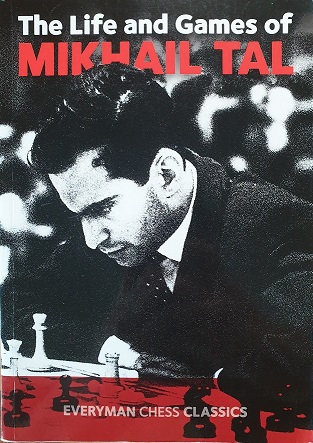 The 8th World Champion was one of the most electrifying and popular players who ever lived. He was the kind of player who would sacrifice a piece with no obvious justification and then somehow dominate his world-class opponent. He was also a gifted writer: warm and full of wit, and his writing is like his chess, entertaining and alive. He takes you from his childhood in Riga through the world championships and the decades beyond it, and what comes through on every page is someone who simply loved chess more than was probably healthy. This book captures something I’ve never seen another chess book quite capture: that chess isn’t just something you get better at, but something that becomes a part of you for life.
My all-time favourite line in chess is from the end of this book where he’s interviewing himself as a journalist after he’s achieved everything in his chess life, becoming World Champion and playing successfully for decades afterwards.
That is my biography from the first day of my chess life to the present.
JOURNALIST. And your plans.
CHESS PLAYER. To play!
8. Studies for Practical Players (2009), Pervakov & Dvoretsky
Best for: calculation and imagination in the endgame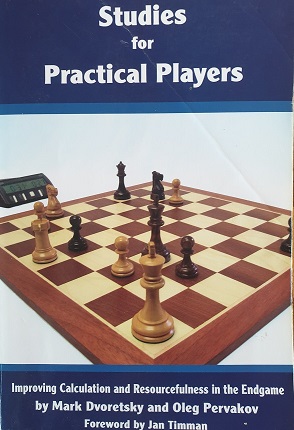 This is the book that made me fall in love with something I’d previously found quite intimidating (it inspired me to write a column on endgame studies in an Australian chess magazine, 50 Moves, for years.). Endgame studies are made-up chess problems where the goal is to find a unique way to win or draw. Good studies are beautiful and they can help you become stronger as they
- teach you about various endgames as you have to evaluate the positions correctly
- nurture your imagination and curiosity for deep and paradoxical moves
- train you to calculate accurately as you have to find the best moves for both sides.
Studies give you a feeling of complete absorption. You sit with a position for twenty, thirty minutes, you go down wrong paths, you come back and then you find it: the move that makes everything click, and it’s a hundred times more satisfying than solving a normal middlegame tactic. This one is genuinely demanding. Players rated FIDE 2000 and above will get the most out of working through it seriously, though anyone can appreciate the ideas even without solving everything. Volume 2 is also filled with breathtaking compositions. If you’re someone who’s always found endgames boring, this book should convince you that you just haven’t seen the right ones yet.
9. Secrets of Spectacular Chess (1995), Levitt & Friedgood
Best for: chess beauty and aesthetics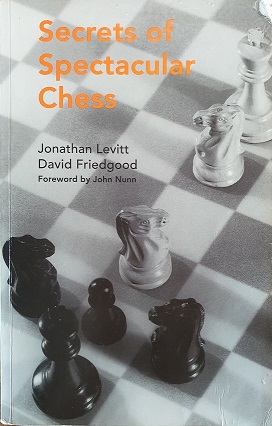 This one is unlike anything else on this list. Most chess books treat beauty as a side quest while this one treats it as the subject. Levitt and Friedgood identify four elements of chess beauty: paradox, depth, geometry and flow, and explore what makes certain moves and ideas feel magical. There’s something here beyond art for the sake of art: in chess, as in mathematics, beautiful ideas often point toward truth. The most elegant idea and the solution tend to overlap more than you’d expect. Developing a feeling for beauty sharpens your intuition for what’s going on in a position.
This book shows you that chess isn’t only about competition. And the many works of art in this book shows you just how infinitely creative and mesmerising the sequences on a chessboard can be. If you’ve ever seen a move that blew your mind, this book is about that feeling and what’s behind it.
10. Secrets of Chess Training (1991), Dvoretsky & Yusupov
Best for: serious training and self-analysis for advanced players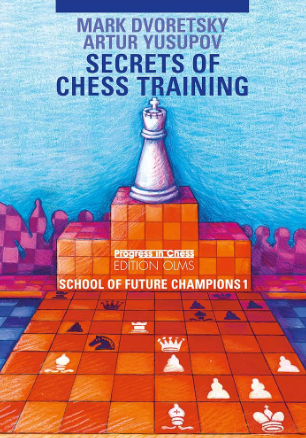 I only read this last year but I wish I’d read it fifteen years ago. Dvoretsky and Yusupov are demanding teachers. They ask you for serious analysis and honest self-assessment, the kind of things that most of us find reasons to avoid. They also show you how to study and how to build the habits that produce long-term improvement.
Dvoretsky developed hundreds of grandmasters and masters over his career, and that’s not an exaggeration. It might be the most remarkable coaching record in the history of the game. Through these books, you get access to the same methods of self-evaluation, analysis and disciplined training that you can follow for years. What stayed with me most was the feeling that there is always more to understand and that this is an inspiring thing, not a discouraging one.
The real value of chess books
A lot of players pick up chess books hoping that reading them will be enough. Sometimes you do learn just by reading. But for me, chess books were never really study material. They were part of daily life, part of the obsession and part of devoting a large piece of my life to this game. The best chess books don’t only teach you chess, but how to think better.
If you've read any of these, tell me what you thought. And if there's a book that shaped your own love for chess or changed you as a player, I'd love to read about it in the comments. When chess players talk about books they love, they usually aren't just talking about pages you read. They're talking about a part of their life.
You may also like
 GM Avetik_ChessMood
10 Things to Give Up to Enjoy Chess Fully
Discover how embracing a lighter mindset can help you enjoy chess again and achieve better results. IM datajunkie
You’re studying chess openings the wrong way (do this instead)
If memorising opening lines made you stronger, many club players would be masters. IM datajunkie
The best non-chess book I’ve read for chess improvement
The Will to Keep Winning by Daigo Umehara IM datajunkie
What the scoreboard never tells you
Why results are the worst judge of your chess CM HGabor
How titled players lie to you
This post is a word of warning for the average club player. As the chess world is becoming increasin… IM datajunkie