
Bishop vs Knight Forever and Ever
The Bishop's Corner.
The Bishop vs Knight battle is for eternity.
Hello friends! I am RuyLopez1000 and in this blog I will be explaining some cool bishop vs knight endgames from the bishop's corner (where the bishop wins).
Endgames of this sort usually involve a passed pawn, the restriction of the king and knight and zugzwang.
Bishop vs Knight
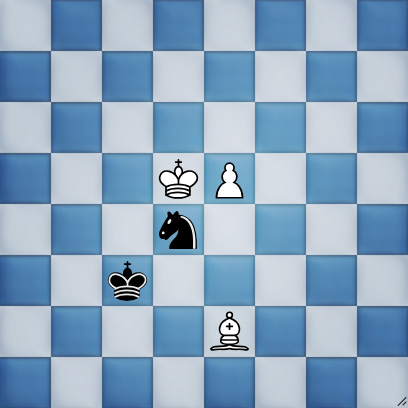 Observe the position. We have bishop vs knight with a passed pawn. We want to promote the pawn. At first it seems we can make a casual waiting move with the bishop, with the idea that since the Black king is cut off, we are clearly winning no matter what. However this can lead to fumbling the win due to the 'tag' concept.
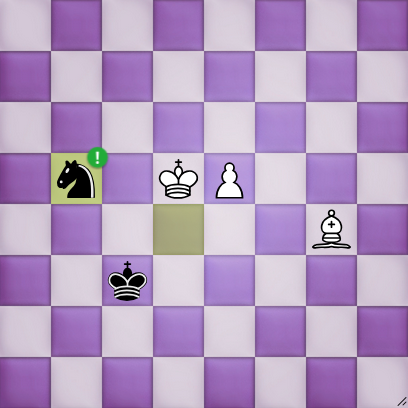 1.Bg4 Nb5!. Now if we push the pawn then Nc7+ forks the pawn and King. And the knight can sacrifice itself for the pawn leading to a draw. Now 2.Be2 attacks the knight. 2.Nc7 defends while controlling the e6 square 3. Kc6 leads to Kd4!
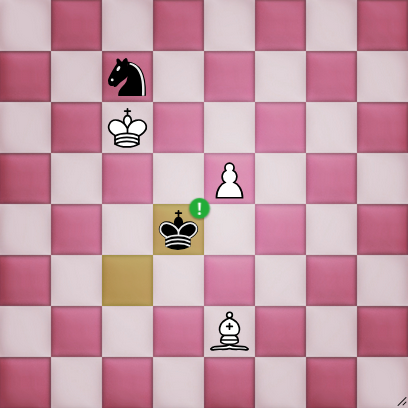 3.Kd4! This is the idea to remember. The King tags the pawn from behind. If White takes the Knight then Black takes the pawn and it is a draw. 3.Kd6 Ne8!+ 4. Ke6 Nc7+ 5. Kf6 Ne8+ and so on with a clear draw as the King cannot escape the checks without giving up the pawn.
It's clear that the idea of Nb5 needs to be stopped. We can do this with 1.Bf1! in the original position, keeping control of b5.
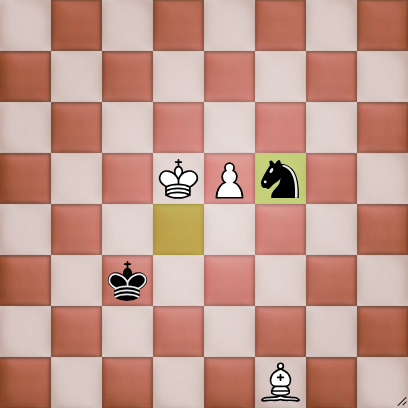 Now 1.Nf5 with a sneaky idea. Now we must play 2.e6 immediately. This is because Black is threatening 2.Ng7! with the same idea as shown earlier (if the White King goes to the knight then Blacks King will win the pawn). This idea works since the knight is on a dark square and can't be attacked by the bishop.
--- --- Now back to continuing from diagram position: (Mainline): 2.e6 Ne7+ 3.Kc5! Kd2 4.Bg2! Ke3 5.Kd6 Nf5+ 6.Ke5 Ne7 7.Bh1 Ng8 8.Be4! Ne7 (In next diagram).
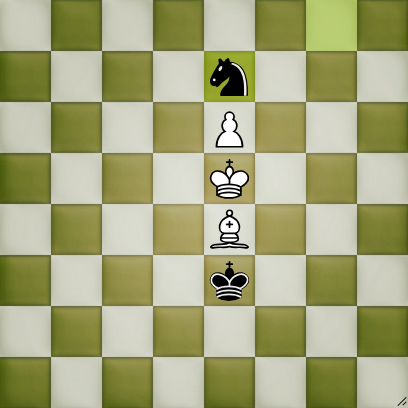 The Bishop on e4 restricts the knight. A property of the bishop and knight dynamic. We can attack the knight. 9. Kd6! Ng8 10. Bh7 Nf6 11. e7 Kf4 12. Ke6 Kg5 13. Kf7!
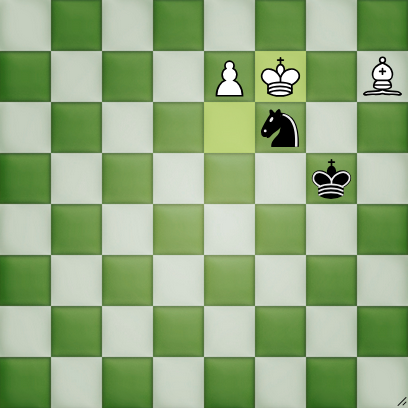 Now Black is in zugzwang. The King can't move as it would blunder the knight. But the knight can't move as it has to cover e8 queening square. White wins. Nxh7 e7=Q.
This sums up the endgame and shows some sidelines:
Fischer vs Taimanov Game 2, 1971 - A tragicomedy
The renowned chess trainer IM Mark Dvoretsky called this position a tragicomedy in his famed Endgame Manual. This is because Taimanov blundered a elementary draw. Beforehand, this game was adjourned in a drawn position after Fischer blundered the win and then they played Game 3. In Game 3, Taimanov believed he had a winning position in the opening but couldn't find the right move and then lost the game. Now he was 0-2. This made him go on tilt and lose the continuation of the adjourned Game 2 endgame.
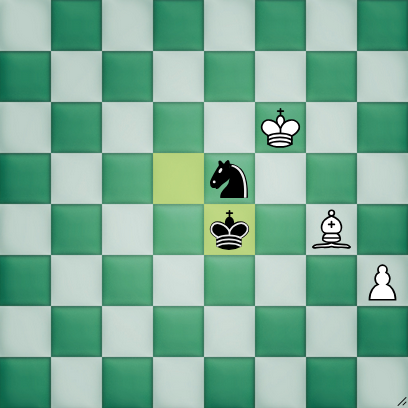 Taimanov blundered with Ke4 here. Fischer replied Bc8! which allows Bb7+ after Nf3 which is an instant win due to the trade of pieces. Bc8 also stops Nd3 with Bf5+. Instead of Ke4, Nd3! draws with the idea of Nf4. This means that it can take the pawn if it advances to h5. Only White's King can dislodge the knight but this gives time for Taimanov to bring his King to h8 with a instant draw due to the wrong color bishop.
Fischer vs Taimanov Game 4, 1971 - A Hidden Secret
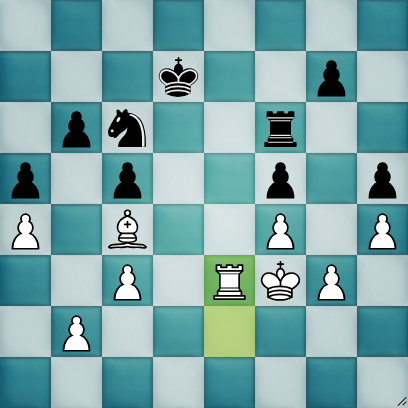 Fischer played 40.Re3. Perhaps the time control had an effect. This move draws a winning position as Taimanov could have played 40.Na7!! with the idea of Nc8-d6 with an impenetrable fortress as Nd6 would not allow Fischer's King to infiltrate through c4. And if 40. Na7 41.Ba6 Nc8 42. Bxc8 Kxc8 43. Re7 g6 44. Ke3 Rd6! cutting off Fischer's King. Taimanov's rook defends b6 and g6 so this would be another fortress.
Taimainov instead played 40.g6. Fischer replied 41.Bb5. I always wondered why Fischer played Bb5. None of the annotated games commented on this move. Then I thought maybe it's because it's just a general restricting move or maybe Fischer was allowing the King to go to c4 later. But now it appears that it may be because Fischer realized his mistake and played Bb5 to stop Na7 (Bb5 is the only winning move).
None of the annotations of this game spotted this mistake at the time, which is expected since there were no computers. It's not a hard to understand concept, but it is surprising because the game proceeds in stages which make you subconsciously think that the Nd6 idea is over. And Na7 is a move that gets screened out as it usually bad in most positions. But even now with computers, Youtube videos and annotated articles by GMs don't mention that this happened.
Two reasons are that maybe they didn't bother to check with the computer since they already knew the ideas and assumed there's nothing new. Another is that they just don't wanna mention it, because it spoils the perfection.
Nevertheless this endgame is one of Fischer's best and is a masterpiece. It is unique for it's study-like character as if it was composed as well as the sparking sacrifice which crowns Fischer's grand plan.
Here is the full endgame annotated (from a study I made):
You may also like
 CM HGabor
How titled players lie to you
This post is a word of warning for the average club player. As the chess world is becoming increasin… thibault
How I started building Lichess
I get this question sometimes. How did you decide to make a chess server? The truth is, I didn't. RuyLopez1000
The History of Chess Geometry
The Wonderland of the Impossible. NM ZugAddict
Are you rated 1600? Good.
It's good to be 1600 and I will explain why ChessMonitor_Stats
Where do Grandmasters play Chess? - Lichess vs. Chess.com
This is the first large-scale analysis of Grandmaster activity across Chess.com and Lichess from 200… RuyLopez1000